

History of the Three Mardi Gras Colors
Ever wondered why purple, gold, and green represent Mardi Gras? Find out the History of the Three Mardi Gras colors and where to find Mardi Gras apparel!
Summary:
– Purple represents justice, green represents faith, and gold represents power in Mardi Gras symbolism.
– The color scheme was formalized in 1872 by the Krewe of Rex in New Orleans.
– The three colors remain central to Mardi Gras identity through apparel, decorations, and parade traditions.
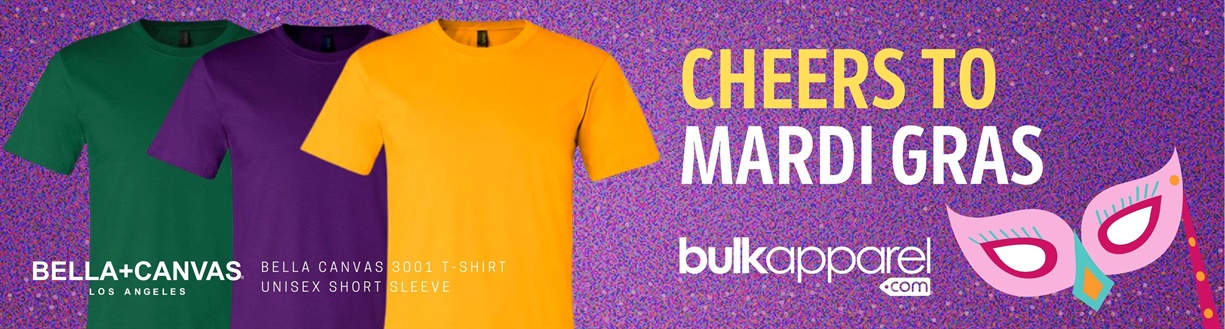
The history of Mardi Gras is a rich and colorful story that dates back to the 17th and 18th centuries. Typically we celebrate by throwing loud parades and extravagant parties. These festivities include wild costumes and delicacies soon to be prohibited by Lenten season. As the start of Lent is signified by Ash Wednesday, Mardi Gras always falls on the Tuesday (Fat Tuesday) before. While the specific date varies year by year, the main colors never change. A big part of this holiday is the unique representation of purple, green, and gold. Here we give you a brief history of the three Mardi Gras colors along with huge savings on wholesale hoodies and more!

The official colors of Mardi Gras were selected back in 1872 as a way to give honor to Grand Duke Alexis Alexandrovich Romanoff visiting from Russia. They were not given their meanings until 1892 though. It was decided that purple would represent justice, green for faith, and gold for power. Interestingly, both Tulane University and Louisiana State University were heavily influenced by these three colors. The reason being the stores in New Orleans were already stocked up on these colors for Mardi Gras season. Both schools found it would be much easier to choose from the available materials at the time. And ever since, LSU has been represented by purple and gold while Tulane chose green along with blue. For those of you wanting to celebrate Mardi Gras with custom apparel or show some school spirit, we can help! Here are some wholesale apparel favorites of both customers and employees!

The Next Level Women’s Ideal Racerback Tank 1533 is perfect for those warmer days when the heat is just a little too much. The 60% cotton and 40% polyester blend material provides an extra bonus of moisture wicking and is available in many colors including Purple Rush and Kelly Green.



FAQ
What are the three Mardi Gras colors?
The three Mardi Gras colors are purple, green, and gold. These colors were officially selected in 1872 by the Krewe of Rex in New Orleans and have since become central symbols of the Mardi Gras celebration.
Why were these specific colors chosen?
These specific colors were chosen by the Krewe of Rex to create a unified visual identity for Mardi Gras festivities. The symbolic meanings of justice, faith, and power were formally assigned to purple, green, and gold.
How are the Mardi Gras colors used in apparel?
The Mardi Gras colors are widely used in t-shirts, hoodies, beads, and costumes to reflect celebration themes. Cotton and blended garments provide vibrant bases for screen printing in purple, green, and gold designs.
Why are the three colors important to Mardi Gras identity?
The three colors are important because they create a consistent symbolic and visual identity for Mardi Gras. Their repeated use in parades, decorations, and apparel reinforces cultural continuity in New Orleans traditions.
When were the Mardi Gras colors established?
The Mardi Gras colors were established in 1872 during a Rex parade in New Orleans. The organization formalized the color scheme to align with royal themes and structured parade traditions.