
Understanding DTF Printing From Design to Finished Transfer
The custom apparel industry continues evolving with decoration methods that give businesses and creators more flexibility. One of the fastest growing options is using Direct to Film transfers, commonly known as DTF printing. Many people have heard the term but still wonder what DTF printing is and why it has become such a popular choice. Understanding the process makes it easier to decide whether it fits your apparel projects.
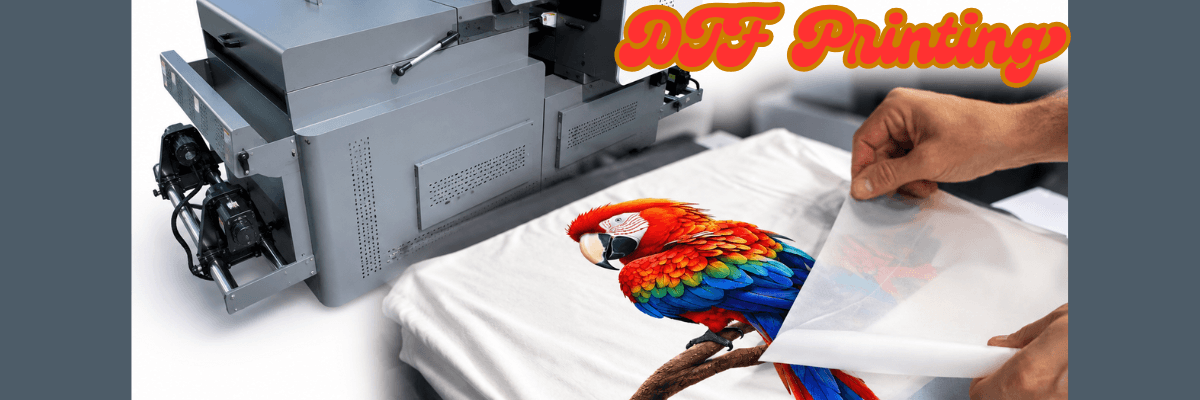
What DTF Printing Really Means
The custom apparel industry continues evolving with decoration methods that give businesses and creators more flexibility. One of the fastest growing options is using Direct to Film transfers, commonly known as DTF printing. Many people have heard the term but still wonder what DTF printing is and why it has become such a popular choice. Understanding the process makes it easier to decide whether it fits your apparel projects.
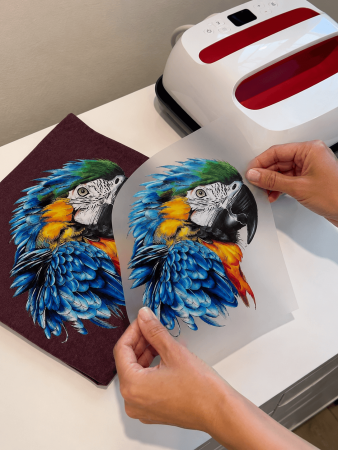
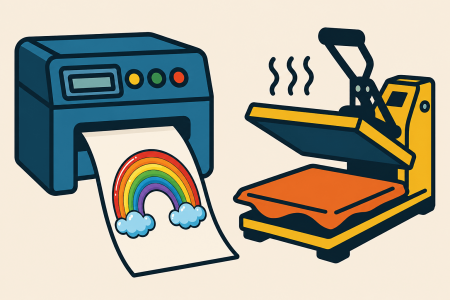
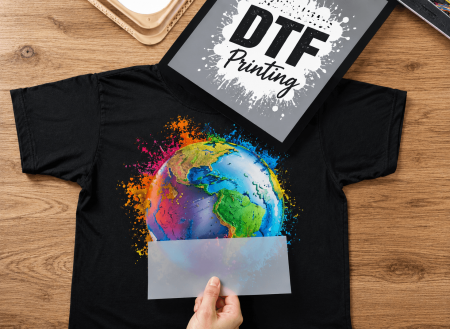
Unlike methods that decorate garments directly, DTF printing begins by printing a design onto a specialized transfer. The completed DTF transfer is then applied to a garment using a heat press. Separating production from application allows transfers to be prepared in advance and pressed only when they are needed, creating a more efficient workflow for many businesses.
Another reason DTF printing continues gaining attention is its versatility. Professionally produced DTF transfers can be applied to cotton, polyester, blends, nylon, and several other compatible fabrics. This allows businesses to decorate different garment types without relying on multiple printing methods for every project.
Quality materials also contribute to the popularity of this process. Designs are printed on premium DTF transfer film, helping produce vibrant colors, fine details, smooth gradients, and durable finished graphics when properly applied. Combined with accurate production techniques, these transfers create professional looking apparel suitable for businesses, organizations, creators, and promotional products.
Many decorators also prefer ready to press dtf transfers because they eliminate the need to invest in specialized DTF printing equipment. Instead, professionally printed transfers arrive ready for application, allowing users to complete garments with their own heat press whenever orders are ready. This makes production more manageable for both small businesses and larger apparel operations.
Another advantage is ordering flexibility. Whether producing a few custom graphics or multiple logo placements, customers can order transfers that match their project requirements without unnecessary complexity. This approach benefits clothing brands, schools, sports teams, promotional companies, and independent creators looking for dependable decoration solutions.
Learning how DTF printing works begins with understanding that it combines digital printing with an efficient transfer application process. Rather than replacing every decoration method, DTF printing offers another reliable option that balances quality, versatility, and convenience for today’s custom apparel industry.
How DTF Printing Works From Artwork to Transfer
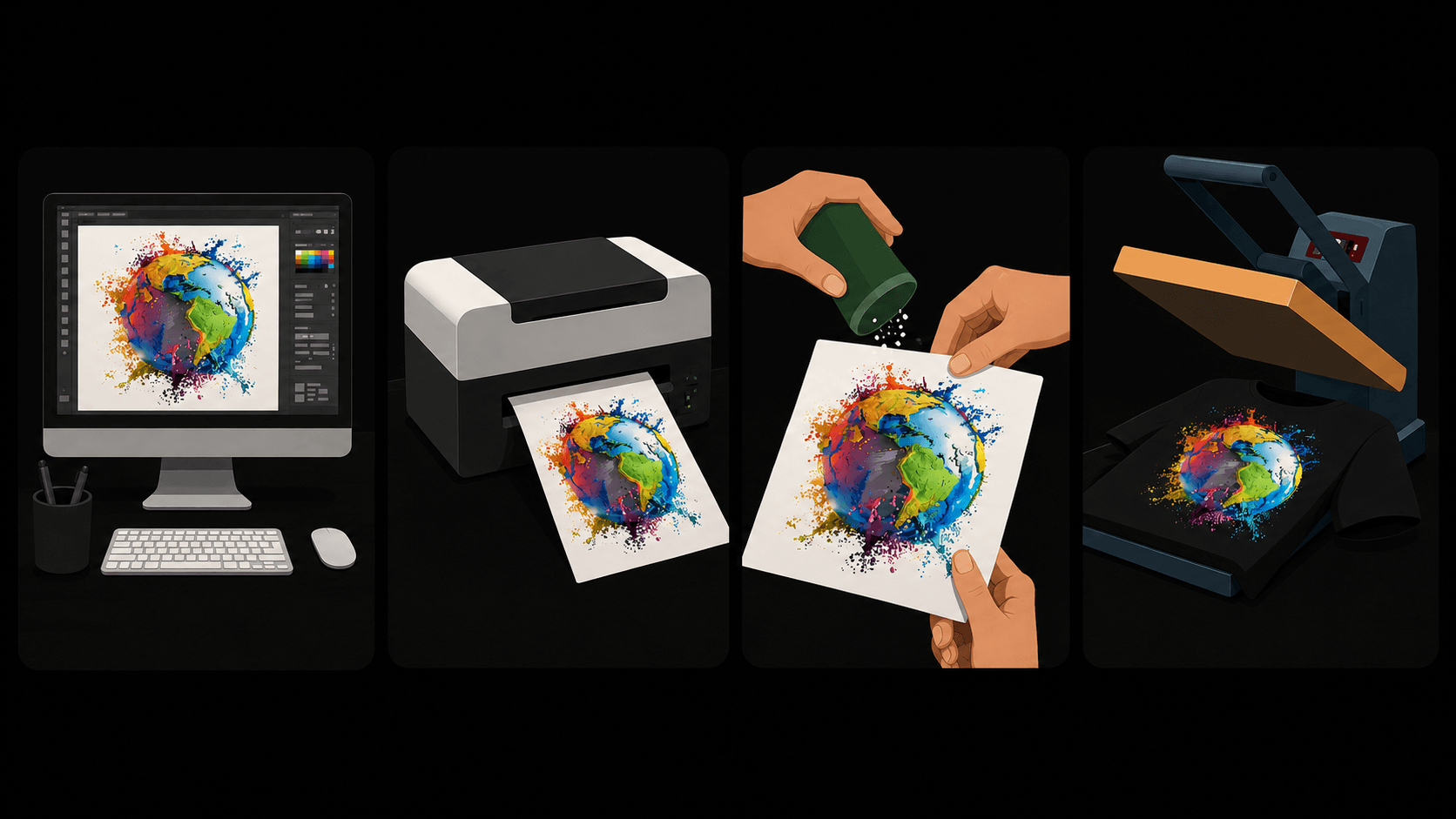
After understanding what DTF printing is, the next step is learning how a digital design becomes a finished transfer ready for apparel decoration. Although the process is straightforward, each stage plays an important role in producing clean, durable results that perform well on a variety of garments.
Everything begins with the artwork. High resolution graphics help produce sharper details, smoother gradients, and more accurate color reproduction. PNG files with transparent backgrounds are commonly recommended because they preserve the design without unwanted borders. Preparing artwork correctly from the beginning reduces production issues and helps ensure the finished transfer matches the original design.
Once the artwork is approved, it is printed onto premium DTF transfer film using specialized DTF inks. Instead of printing directly onto fabric, the design is created on the transfer first. An adhesive powder is then applied before the transfer moves through a curing process. This prepares the design for heat application and allows it to bond properly with compatible garments.
Businesses managing multiple graphics can also improve efficiency by choosing to Build a Gang Sheet. Rather than printing one design at a time, several logos, sleeve graphics, or back prints are arranged on a single sheet. This maximizes printable space while reducing material waste and making production more organized.
After arranging the artwork, customers simply Upload DTF Gang Sheet files for production. This approach is especially useful for businesses handling multiple projects because several designs can be printed together before being trimmed for individual garments.
Selecting the correct DTF Transfers by Size is equally important. Smaller transfers work well for left chest logos and sleeve graphics, while larger options are ideal for full front or back designs. Choosing the proper DTF transfer sizes helps each design fit the garment correctly while reducing unnecessary material use.
Many businesses also choose custom DTF transfers because printing and garment decoration remain separate steps. Transfers are professionally produced first and shipped ready for application, allowing customers to press them onto garments using their own heat press while following the recommended instructions.
Separating production from application gives businesses greater control over inventory and scheduling. Transfers can be stored until they are needed, allowing decorators to complete garments only after orders are confirmed. This efficient workflow is one of the reasons DTF printing continues growing as a dependable solution for modern custom apparel.
DTF Printing Compared With Other Decoration Methods
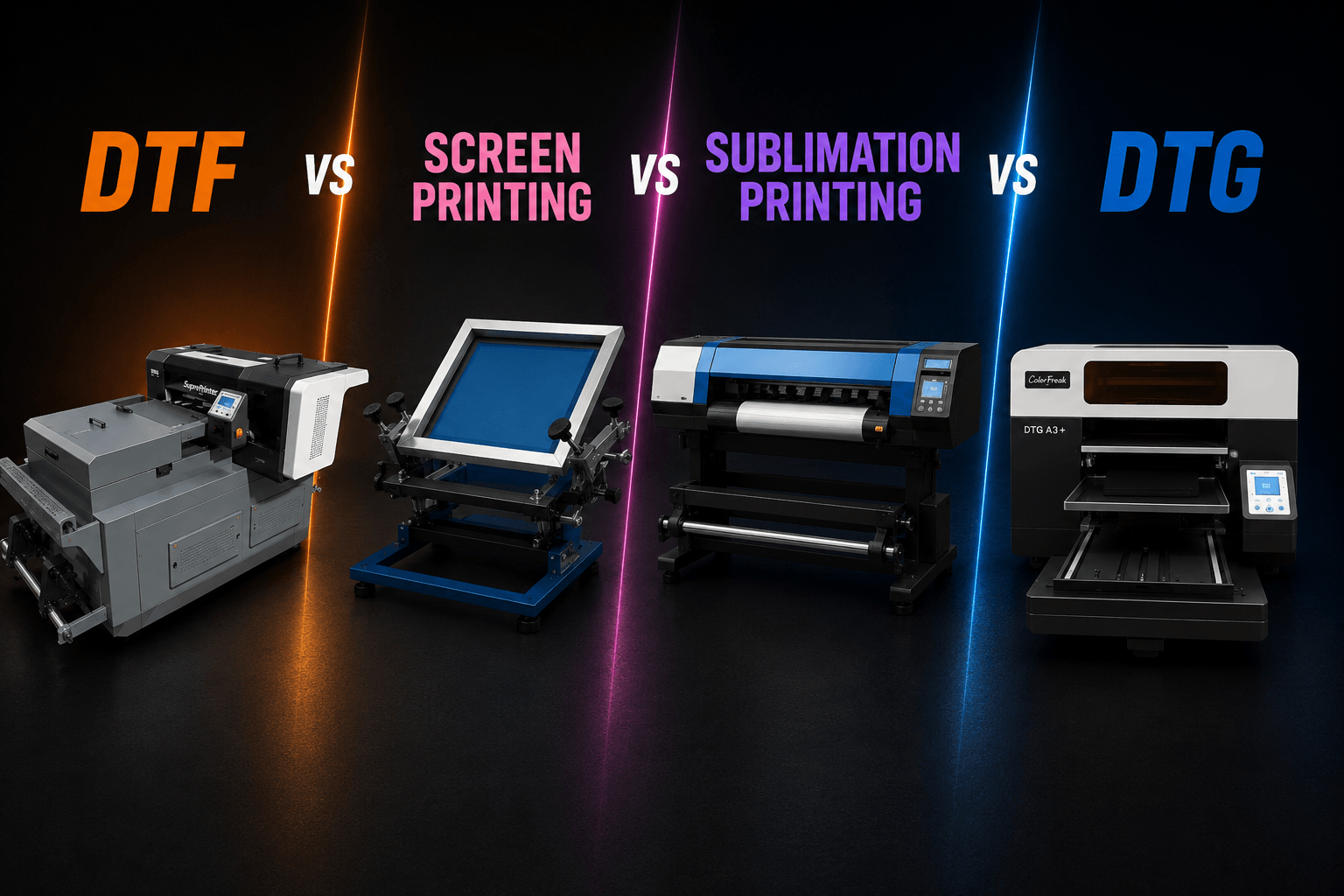
Every blank apparel decoration method has its own strengths, making it important to choose the one that best fits your project. While DTF printing has become increasingly popular, it is not intended to replace every printing technique. Instead, it offers another dependable option that works well for many custom apparel applications.
One of the most common comparisons is DTF vs screen printing. Screen printing has long been the preferred choice for large production runs because it delivers consistent results once the setup is complete. However, each color requires a separate screen, which can make smaller or frequently changing orders less efficient. DTF printing eliminates that setup by producing transfers directly from a digital design, making it a practical choice for short runs and custom orders.
Many people also compare DTF printing with direct to garment printing, or DTG. DTG applies ink directly onto the fabric and is well suited for detailed artwork on cotton garments. DTF printing, on the other hand, creates a transfer first before it is applied to the garment. This allows the same transfer process to work across a wider range of compatible fabrics, including cotton, polyester, blends, and nylon.
Sublimation is another popular decoration method, especially for light colored 100% polyester apparel. Because the ink bonds directly with polyester fibers, it produces vibrant and long lasting designs. However, its fabric compatibility is more limited. DTF printing offers greater flexibility by allowing the same transfer process to decorate several fabric types without changing production methods.
Production planning also differs between these decoration techniques. Since DTF transfers are produced before being applied to garments, businesses can keep transfers on hand and press them only when orders arrive. This helps simplify inventory management while allowing apparel decorators to respond more quickly to customer demand.
Businesses producing multiple logos or recurring designs can also improve efficiency by organizing artwork with DTF gang sheets. Printing several graphics on one sheet maximizes available space and makes it easier to prepare transfers for different garments before separating them for application.
No single decoration method is perfect for every project. Factors such as garment type, artwork, production volume, and turnaround time all influence the best choice. Understanding these differences allows businesses and creators to select the decoration method that best matches their production goals while delivering professional results.
Choosing DTF Printing for Future Apparel Projects
Choosing the right decoration method becomes easier once you understand how DTF printing fits into the overall apparel production process. Whether you create branded merchandise, school apparel, promotional products, uniforms, or retail collections, selecting the right transfer solution helps improve efficiency while maintaining consistent results.
One reason many businesses choose DTF printing is its ability to work across a variety of compatible fabrics. Instead of relying on different decoration methods for different garments, professionally produced transfers provide a versatile solution for cotton, polyester, blends, nylon, and more. This makes it easier to manage different apparel projects while maintaining consistent quality throughout production.
Planning ahead also creates a smoother ordering experience. Businesses with multiple graphics can organize their artwork using a DTF gang sheet builder, allowing several designs to fit on a single sheet before production begins. Once the layout is complete, the file can be uploaded for production, making efficient use of printable space while simplifying the ordering process.
Selecting the proper DTF transfer sizes is equally important. Smaller graphics are often ideal for left chest logos or sleeve prints, while larger transfers work well for full front or back designs. Choosing the correct size helps ensure every graphic fits the garment as intended while creating a polished finished appearance.
As you explore DTF printing, focus on understanding the complete process from artwork preparation to final application. Knowing how transfers are produced and applied will help you make informed decisions for future apparel projects. When you are ready to order professionally produced ready to press dtf transfers, Bulk Apparel wholesaler offers high quality DTF transfers designed to be applied with your own equipment.
Please note: BulkApparel provides DTF transfers only. Customers are responsible for applying the transfers using their own heat press. We do not offer heat pressing or garment decoration services.
Top 10 Questions About DTF Printing